
If you’re eagerly counting down the days until you find out your baby’s gender, you’re not alone. For many expectant parents, those early weeks of pregnancy are filled with excitement, curiosity, and a fair bit of Googling. One of the most popular questions out there is, “How accurate is a blood test for gender at 10 weeks?” Thanks to advances in DNA testing, you no longer have to wait until your anatomy scan to get answers.
In this article, we’ll explore the science behind early gender detection using blood tests, how they compare to traditional ultrasounds, and what you should know about timing, test types, and potential limitations. We’ll also highlight trusted options, such as Peekaboo’s at-home and in-office gender DNA tests, which offer non-invasive ways to learn your baby’s gender as early as 6 weeks. Whether you’re preparing for a big reveal or are just too excited to wait, this guide will help you understand what to expect from a gender blood test.
The Science Behind Gender Blood Tests
How exactly can a blood test tell you your baby’s gender so early in pregnancy? It all comes down to cell-free fetal DNA, tiny fragments of your baby’s DNA that circulate in your bloodstream. As early as six weeks, there’s enough of this fetal DNA for specialized lab tests to detect whether a Y chromosome is present. If it is, you’re likely carrying a boy; if not, it’s likely a girl.
There are a couple of ways this type of testing is done. One is through non-invasive prenatal testing (NIPT), which is usually ordered at about 10 weeks by a healthcare provider. This test primarily screens for genetic conditions but can also tell you the gender of your child. NIPT gender accuracy is over 99%.
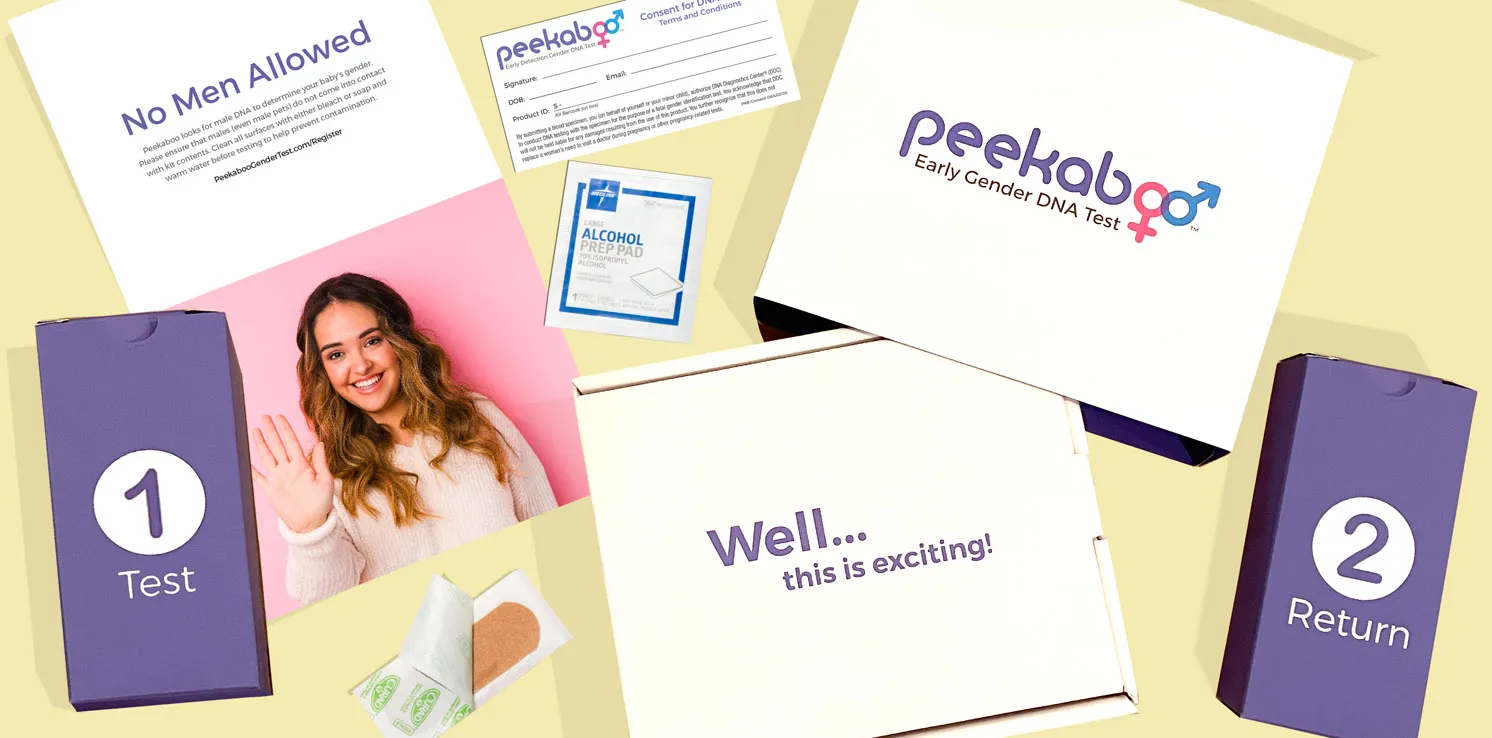
Then there are dedicated gender DNA tests, like those offered by Peekaboo, which solely determine fetal sex. These tests don’t look for chromosomal abnormalities, but they can deliver results quickly (as early as 6 weeks). In clinical trials using venipuncture, Peekaboo demonstrated over 99% accuracy. Collection can be done in the convenience of your own home or through an in-office visit.
Both types of tests use a similar principle: analyze the presence (or absence) of male DNA in the mother’s blood using highly sensitive lab equipment.
Pro Tip: If you’re using an at-home option like Peekaboo’s Gender DNA Test, it’s important to follow all collection instructions carefully, especially when it comes to preventing male DNA contamination. At Peekaboo, we mitigate the risk of male contamination by using an all-female lab staff to determine the results of your test.

How Accurate Are Gender Blood Tests at 10 Weeks?
At 10 weeks pregnant, your baby is roughly the size of a kumquat, but surprisingly, there’s already enough fetal DNA in your bloodstream to reveal their gender with impressive precision. So, just how accurate is a blood test for gender at this stage? Most clinical studies indicate these tests are over 99% accurate.
Pro Tip: Peekaboo Pro offers over 99% accuracy even earlier — starting at 6 weeks into your pregnancy.
Comparing Gender Blood Tests to Ultrasound
Most people think of the anatomy ultrasound—typically done around 18 to 20 weeks—as the big gender reveal moment. And while ultrasounds are incredibly valuable for monitoring fetal development, they’re not always the most reliable way to determine gender early on. At 10 weeks, in particular, ultrasound just can’t compete with the precision of a blood test.
Ultrasound gender guesses before 14 weeks rely on visible anatomy, which may not be fully developed or positioned clearly enough to read. That’s why early ultrasounds can be wrong, and why many providers wait until later to even attempt to identify the baby’s sex. In contrast, a 10-week gender blood test detects what the ultrasound can’t see yet: DNA.
Tests such as Peekaboo’s At-Home Gender DNA Test or Peekaboo PRO can tell you as early as 6 weeks whether you’re expecting a boy or a girl.In clinical trials using venipuncture, the Peekaboo test demonstrated over 99% accuracy.
That doesn’t mean ultrasounds aren’t important. They provide a full picture of your baby’s growth and development and can help confirm gender later on if desired. But if you’re hoping for a clear, science-backed answer sooner, a blood test gives you that option without the wait or guesswork.
Limitations and Considerations
While gender blood tests at 10 weeks are highly accurate, no test is completely foolproof. A few factors can affect the results, especially if the test is taken too early or not performed correctly.
One major consideration is timing. Testing before the recommended window—before 6 weeks—can lead to insufficient levels of fetal DNA in your bloodstream. This can result in a failed test or an inaccurate result.
Contamination is another issue, particularly with at-home kits that use finger-prick samples. If male DNA (say, from a partner helping with the test or the presence of a male pet) accidentally gets into the sample, it could lead to a false male result. Peekaboo helps minimize this risk by using all-female lab staff and offering the Click device, which draws blood from the upper arm, keeping hands (and potential outside DNA) out of the process entirely.
If you want the highest level of control, the Peekaboo PRO In-Office Test uses a professional blood draw in a clinical setting, reducing the chances of user error and contamination even further.
Lastly, it’s important to understand that gender blood tests—while incredibly accurate—don’t replace medical imaging or diagnostic testing. They’re designed to satisfy curiosity, help with planning, and bring joy during early pregnancy. If there’s ever a question or conflicting result, your healthcare provider can help guide your next steps.
Frequently Asked Questions: At-Home Gender Test Accuracy
If you’re considering an early gender blood test—or already waiting on results—it’s totally normal to have questions. While the science behind these tests is solid, pregnancy is personal, and every parent-to-be wants to feel confident in the path they choose. Below are a few of the most common questions people have about gender blood tests.
Can a blood test give a false positive or false negative for gender?
Yes, although it’s rare, false positives and false negatives can happen. The most common reason is testing too early, when there isn’t enough fetal DNA to detect gender accurately. Another possibility is sample contamination—especially with at-home tests—where trace amounts of outside male DNA could skew the results. That’s why it’s crucial to test at the right time and follow all instructions carefully.
Is a blood test for gender the same as a test for genetic disorders?
While both tests use a blood sample from the mother and analyze fetal DNA, their goals are different. NIPT tests (non-invasive prenatal testing) are primarily designed to screen for chromosomal conditions like Down syndrome and may also report gender. In contrast, dedicated gender DNA tests—such as those from Peekaboo—focus exclusively on identifying fetal sex and do not screen for genetic abnormalities.
What should I do if my blood test and ultrasound results don't match?
Don’t panic—mismatches are rare, but they can happen. If your ultrasound shows a different gender than your earlier blood test, it could be due to an error in timing, interpretation, or sample contamination. Your best next step is to follow up with your healthcare provider. They may recommend a repeat ultrasound or confirm the gender through another method if necessary.
Discover Your Baby's Gender With Confidence
If you’re eager to start planning, celebrating, or simply connecting more deeply with your pregnancy, a Peekaboo gender DNA test can reveal your baby’s gender as early as 6 weeks. In clinical trials using venipuncture, the Peekaboo test demonstrated over 99% accuracy, so you can move forward with excitement and peace of mind.