
Jump To:
- Step 1: Call a Doctor After a Positive Pregnancy Test
- Step 2: Start a Prenatal Vitamin & Ask About Folic Acid
- Step 3: Review Medications & Exposures
- Step 4: Build a Low-Pressure Plan for the First Few Weeks
- Step 5: Enjoy Early Milestones
- Peekaboo Collection Options
- Downloadable Simple Checklist
- Frequently Asked Questions
Seeing a positive pregnancy test can make time feel like it’s speeding up and standing still at once. Whether you’ve been hoping for this result, were surprised by it, or are still figuring out how you feel, the next step does not have to be perfect. Start with a few practical health steps, give yourself room for your emotions, and take pregnancy one appointment and one day at a time.
Your report uses both scientific and legal language to describe our highly precise process. What follows is a straightforward breakdown of each section and what it means for you.
Step 1: Call a Doctor After a Positive Pregnancy Test
Call an OB-GYN, midwife, family doctor, or prenatal clinic soon after a positive pregnancy test to begin prenatal care and ask when you should be seen. Your first appointment may not happen immediately, but the office can advise you based on your health and pregnancy history, current medications, symptoms, and estimated due date.
Call sooner if you have bleeding, abdominal or pelvic pain, severe nausea or vomiting, a history of pregnancy complications, a chronic health condition, or questions about a current medication.
Step 2: Start a Prenatal Vitamin and Ask About Folic Acid
Consider taking a daily prenatal vitamin with folic acid. Folic acid is especially important early in pregnancy because it helps prevent serious birth defects of the baby’s brain and spine, called neural tube defects.
Your prenatal-care provider can tell you whether your health history, family history, or current medications mean you need a specific formulation or higher dose of folic acid. Do not start a higher-dose supplement on your own unless a healthcare professional recommends it.
Bring, or make a note of, every vitamin, supplement, herbal product, and medication you currently take. Your provider or pharmacist can help you avoid unnecessary overlap and choose a prenatal vitamin that fits your needs.
Step 3: Review Medications and Everyday Exposures
Do not panic if you did not know you were pregnant right away. Many people find out after having a drink, taking a medication, eating foods they would now avoid, or continuing their usual routine. Do not let worry keep you from seeking prenatal care. Make a note of what happened and discuss it honestly with a healthcare professional.
As you move forward, avoid alcohol, smoking or vaping, recreational drugs, and prescription medications used for nonmedical reasons. If you take a prescription medication, do not stop or change it on your own. Contact the clinician who prescribed it, your prenatal-care provider, or a pharmacist to review its safety. In some cases, suddenly stopping a medication or leaving a health condition untreated can be harmful. Be sure to discuss over-the-counter medicines, vitamins, herbal products, and supplements during this conversation.
A few simple habits can also support you in early pregnancy:
- Drink water throughout the day.
- Eat regular meals or small snacks when possible, especially if nausea makes larger meals difficult.
- Rest when you need to.
- Choose gentle movement if you feel well and have not been advised to limit activity.
- Limit contact with potentially harmful substances, including chemicals, smoke, or other workplace and household exposures, and ask your provider about any specific concerns.
If you need help cutting back or stopping alcohol, nicotine, marijuana, or other substances, tell your healthcare provider. Support and treatment are available, and seeking help is a positive step for you and your pregnancy.
Step 4: Build a Low-Pressure Plan for the First Few Weeks
After a positive pregnancy test, it can feel like there are a hundred decisions to make at once. The good news: you do not need to make them all today. In the first few weeks, focus on gathering a little helpful information, connecting with prenatal care, and giving yourself support, not on creating a perfect pregnancy plan.
The first step is to track the information your care team may ask about. Before you call or attend your first prenatal appointment, start a simple note on your phone or write down a few details. You do not need every answer. Your care team can help fill in the gaps.
It may be helpful to note:
- The first day of your last menstrual period, if you know.
- The date you took your positive pregnancy test.
- Any prescription medications, over-the-counter medications, vitamins, herbal products, or supplements you currently use.
- All medication, food, or environmental allergies.
- Ongoing health conditions, past surgeries, and prior pregnancies.
- Family medical history that may be relevant to pregnancy or inherited health conditions.
Keeping this information in one place can make an initial appointment feel less overwhelming. It also gives you a running list to add to when a question pops into your mind at 2 a.m., because it probably will.
Step 5: Enjoy Early Milestones
Once you have handled the immediate next steps, contacting a prenatal-care provider, reviewing medications and supplements, and making a plan for the first few weeks, you may be ready to make space for the more joyful parts of pregnancy.
For some people, that means taking a quiet moment to let the news sink in. For others, it may mean starting a private pregnancy journal, taking a first photo, browsing baby-name ideas, or planning a gender-reveal party. For many parents, learning their baby’s sex is one of the most exciting milestones to look forward to. With Peekaboo Early Gender DNA Test, you may not have to wait until mid-pregnancy.
There is no required timeline for any of it. Early pregnancy can be emotional and uncertain, so let the milestones you choose reflect what feels meaningful to you.
Find out baby’s sex early with the Peekaboo Early Gender DNA Test
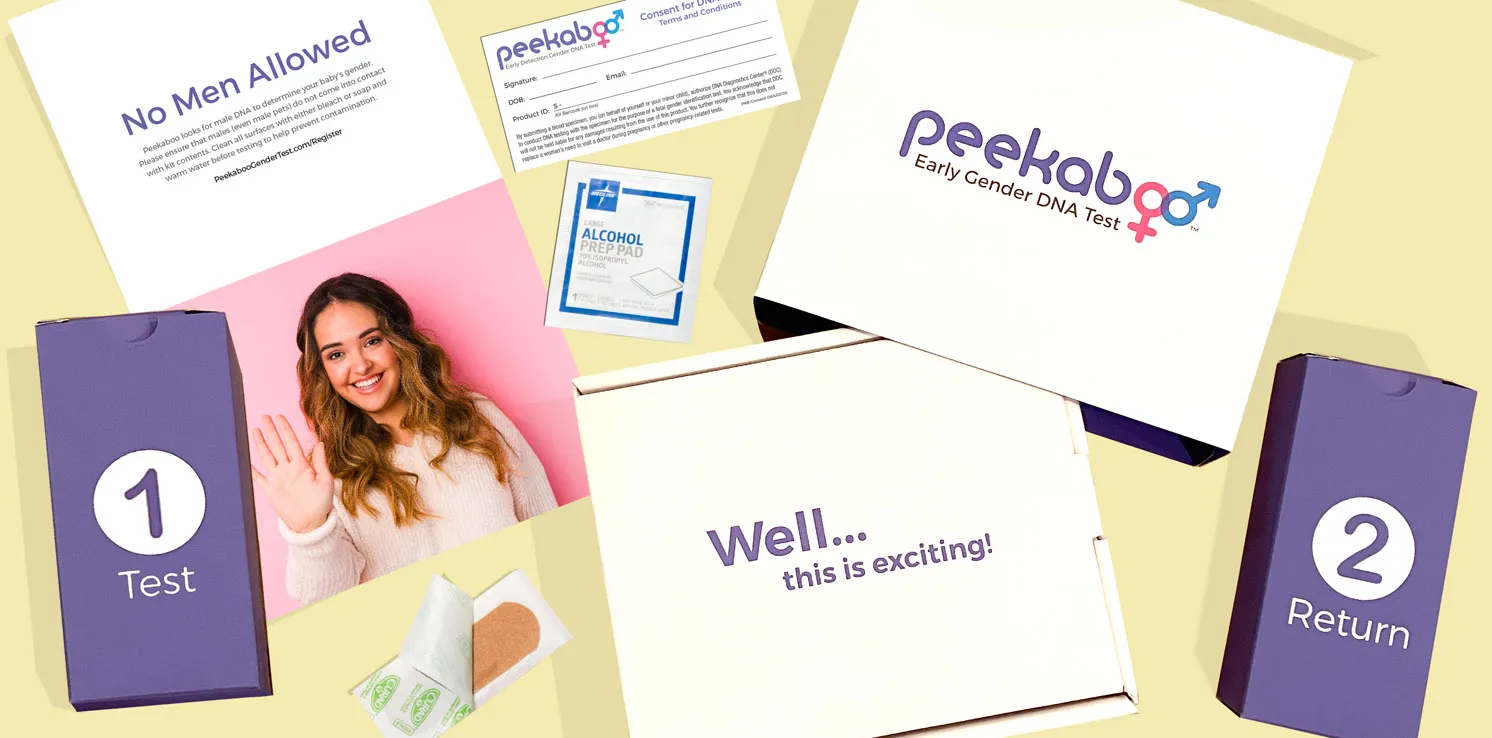
If you’re excited to learn your baby’s sex, the Peekaboo™ Early Gender DNA Test is an at-home blood test available from 6 weeks pregnant. It uses a small maternal blood sample to detect fetal DNA and reports whether a Y chromosome is present. The test demonstrated over 99% accuracy* in a clinical validation study.
Choose the collection option that works best for you:
- Peekaboo Click: An at-home upper-arm collection device. Collection typically takes less than five minutes.
- Peekaboo Lancet: An at-home finger-prick option.
- Peekaboo PRO: An in-office collection option for those who prefer assistance from a provider or trained collection location.
An early gender DNA test can be a fun way to plan a reveal, consider names, or feel connected to your pregnancy. Peekaboo provides early fetal-sex results only and does not replace prenatal care, medical screening, or guidance from your healthcare provider. It has not been validated for twin or other multifetal pregnancies.
Whether you test early, wait for an ultrasound, or keep the surprise until birth, choose the option that feels right for you.
Take it one step at a time
A positive pregnancy test can bring a lot of feelings, and you don’t need to have everything figured out today. Start with prenatal care, review your medications and supplements, and focus on one manageable next step at a time.
When you are ready, make room for the milestones that feel meaningful to you. For many parents, learning their baby’s sex is one of the first exciting moments to celebrate their growing family. Peekaboo’s Early Gender DNA Test can help families enjoy that milestone sooner.
A Simple Checklist for your first few days:
- Write down the first day of your last menstrual period.
- Save the date of your positive pregnancy test.
- Call an OB-GYN, midwife, family physician, or prenatal clinic to ask about scheduling care.
Discovering Your Baby's Gender With Peekaboo
These days, you don’t need to rely on myths to tell you if you’re having a baby girl or boy. As soon as 6 weeks into your pregnancy, you can take the Peekaboo At-Home Early Gender DNA Test and get fast, reliable results. It’s a simple and trusted way to plan your gender reveal with confidence — and it’s backed by the American Pregnancy Association.

Order Your Peekaboo Test Kit Today
Excited to know your little one’s gender? Order the Peekaboo At-Home Early Gender DNA Test today. With over 99% accuracy* in clinical trials, this convenient test lets you find out your baby’s gender from the comfort of home; no long waits, no stress.
Frequently Asked Questions: Pregnancy
What should I do immediately after a positive pregnancy test?
Start by scheduling a prenatal care appointment, beginning a prenatal vitamin with folic acid if appropriate for you, reviewing medications with a clinician or pharmacist, and avoiding alcohol, smoking, and recreational drugs. Keep track of your last menstrual period and seek urgent care for heavy bleeding, severe pain, fainting, trouble breathing, or other severe symptoms.
How soon should I see a doctor after finding out I’m pregnant?
Contact a prenatal-care provider soon after a positive test. The office can tell you when to come in based on your health history, symptoms, estimated gestational age, and local scheduling practices.
Is it normal to feel scared after finding out I’m pregnant?
Yes. A positive pregnancy test can bring happiness, anxiety, surprise, grief, uncertainty, or several emotions at once. You do not need to have every answer right away. Focus on one practical step and reach out to someone you trust or a healthcare professional if you need support.
When can I find out my baby's sex?
Options vary. Some prenatal screening tests and ultrasounds may provide fetal sex information later in pregnancy. If you want an early at-home option, Peekaboo’s Early Gender DNA Test can be used as early as 6 weeks pregnant and looks for fetal DNA in maternal blood. It is not a replacement for routine prenatal medical care or screening.
Can I use Peekaboo if I'm pregnant with twins?
Peekaboo’s Early Gender DNA Test has not been validated for multifetal pregnancies. If you are expecting twins or other multiples, discuss timing and options with your prenatal-care provider and rely on recommended ultrasound care for sex determination.